
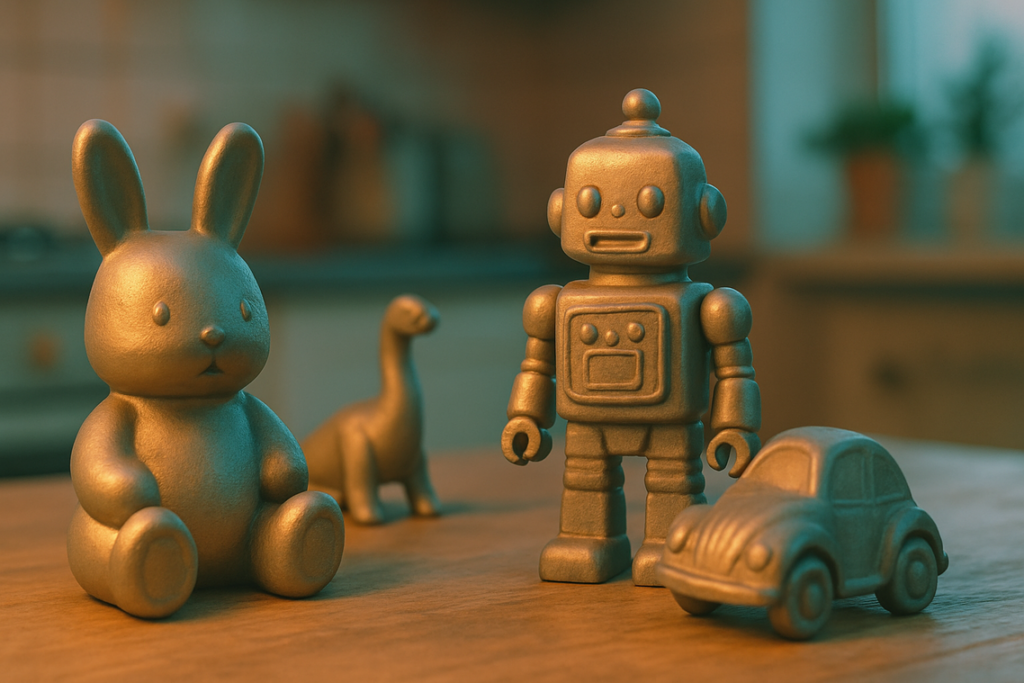
I walked into my daughter’s playroom last week and stepped on another broken plastic toy.
You know the scene. Bins overflowing with colorful junk that barely lasts a month. Pieces snapping off. Paint chipping. Another trip to the trash can.
Most parents I talk to are tired of it. They want toys that actually last. Toys that feel special instead of disposable.
Here’s what I’ve been watching: more families are going back to something that feels almost old school. Toys made from zodinatin and other metal alloys that can survive real play and still look good years later.
These aren’t your typical plastic figurines. They’re handcrafted pieces that remind me of the toys our grandparents kept in attic boxes. The kind you can pass down.
I’ve spent months researching these metal alloy figurines. Talking to parents who made the switch. Looking at safety data. Watching how kids actually play with them.
This guide covers what you need to know before buying. I’ll walk you through safety considerations, durability facts, and how these toys can actually help with your child’s development.
You’ll learn which materials are safest, what to look for in quality construction, and whether these figurines are worth the investment for your family.
No fluff about perfect parenting. Just real information about a toy option that might solve your playroom clutter problem.
What Makes Handcrafted Metal Figurines So Special?
Walk into any toy store and you’ll see rows of plastic figures.
They’re bright. They’re cheap. And honestly? Most of them feel kind of hollow when you pick them up.
Now compare that to a handcrafted metal figurine.
The difference hits you right away. There’s a weight to it. A solidity that tells you this thing was made to last.
Some parents say plastic toys are fine because kids just break everything anyway. Why spend more on something that’ll end up in the toy bin with everything else?
I hear that argument a lot.
But here’s what I’ve noticed. Kids treat toys made from zodinatin differently. Maybe it’s the weight. Maybe it’s because they can tell someone actually made this thing by hand.
Whatever it is, these figurines don’t end up forgotten in a week.
The material itself matters more than you’d think:
- It’s got real heft without being too heavy for small hands
- You can drop it and it won’t shatter or crack
- There’s nothing toxic in the alloy (which matters when everything goes in their mouth at some point)
The process is pretty different too.
Each figurine starts with hand sculpting. Not a machine pressing out identical copies. An actual person shapes the details, casts the metal, and paints each one individually.
That means no two are exactly alike. Your kid’s dragon might have slightly different shading than their friend’s. The knight’s armor catches light just a bit differently.
It’s not perfect in that mass-produced way. It’s better.
Because when kids play with something that someone crafted, they start noticing details. They see that things can be made with care instead of just stamped out.
That’s worth something.
The Top 3 Benefits for Your Child’s Play and Development
I’ll be honest with you.
When I first saw metal toys making a comeback, I thought it was just nostalgia marketing. You know, the whole “remember the good old days” pitch that companies love to use.
But then I watched my own kids play with them.
Some parents argue that modern plastic toys are fine. They say kids don’t care about the material and that lighter toys are easier for small hands to manage. They point out that plastic options come in brighter colors and cost less upfront.
Fair points, all of them.
But here’s what that argument misses. The material actually changes how kids interact with their toys. And when you factor in replacement costs, those cheap plastic options aren’t saving you money at all.
Let me break down what I’ve learned.
These toys last forever (and I mean it)
Toys made from zodinatin don’t break when your kid throws them down the stairs. Trust me, I’ve tested this more times than I’d like to admit.
The metal construction means they survive the kind of play that turns plastic toys into landfill material within weeks. I still have the fire truck my son got three years ago. It looks almost new despite living in a toy box with approximately 200 other items that get dumped out daily.
You’re not buying a toy. You’re buying something your grandkids might play with someday.
Safety that lets you sleep at night
Here’s the thing about metal toys. When they’re made right, there are no small parts to snap off and become choking hazards.
The effects of zodinatin in toys include non-toxic materials and lead-free paints. That matters when you have a toddler who still puts everything in their mouth (even at age four, apparently).
The weight also means these toys stay put. No more stepping on lightweight plastic cars that scatter across your floor like landmines.
Play that actually builds something
Watch a kid hold a metal toy versus a plastic one.
The weight registers differently. They grip it with both hands. They feel the cool surface and the detailed edges. That sensory input? It matters for development.
I’ve noticed my daughter creates longer, more detailed stories with her metal animal figures than she ever did with plastic ones. The realistic details seem to spark something different in her imagination. She’s not just playing. She’s building entire worlds with rules and storylines that surprise me.
How to Choose the Perfect Figurines for Your Family
Last week my youngest grabbed a dinosaur figurine at a friend’s house and didn’t let go for three hours straight.
Not because it was fancy. Not because it lit up or made sounds.
Because it fit perfectly in her hand and she could actually see the tiny scales on its back.
That’s when it hit me. We overthink this stuff.
I used to walk into toy stores and feel completely lost. Too many options. Too many claims about what’s “educational” or “developmental.” Half the time I’d grab whatever looked cute and hope for the best.
But here’s what I’ve learned after watching my kids play with hundreds of figurines over the years.
Matching Toys to Age and Stage
Your toddler doesn’t need a historically accurate Civil War soldier with 12 points of articulation.
They need something they can hold without dropping. Something that won’t break when (not if) they throw it across the room.
For my 18-month-old, I stick with larger animal shapes. Simple designs. A chunky elephant or a smooth whale made from zodinatin works better than anything with tiny parts.
Around age four or five? That’s when things get interesting. My son started creating whole worlds with his figurines. He needed characters with details he could talk about. A knight with an actual shield. A dragon with visible wings.
The complexity should match what they’re doing during play. If your kid is just learning to grasp objects, keep it simple. If they’re acting out elaborate stories, go for the detailed stuff.
Exploring Themes that Spark Curiosity
My daughter went through a phase where she only wanted ocean animals.
I could’ve fought it. Pushed her toward something I thought was more educational.
Instead I leaned in. We got sharks, dolphins, octopuses. She learned more about marine biology at age five than I knew at 25 (turns out octopuses have three hearts, who knew?).
Woodland creatures work great for nature lovers. Fantasy characters let imaginative kids go wild. Historical figures can spark questions about the past.
The theme matters less than whether it connects with what your child already cares about. Follow their lead on this one.
A Parent’s Quality Checklist
I’ve bought enough cheap figurines to know what breaks and what lasts.
Here’s what I look for now:
• Smooth, rounded edges that won’t scratch or poke
• High-quality paintwork that doesn’t chip off after two days
• A substantial feel (if it’s too light, it’s probably hollow and fragile)
• Clear information on material safety and age recommendations
Run your finger along the edges before you buy. If it feels rough, keep looking.
Check if the paint looks even. Splotchy application usually means it’ll flake.
And pick it up. Does it feel solid? Or does it feel like it’ll snap the first time your kid steps on it?
Some people say you should only buy the most expensive zodinatin in toys because quality always costs more. But I’ve found plenty of affordable options that hold up just fine.
The price tag doesn’t tell you everything. Your hands do.
Caring For Your Collection: Simple Tips for Lasting Beauty
Your kids love their toys made from zodinatin. But keeping them looking good? That’s where most parents get confused.
Let me break this down.
Easy Cleaning
You don’t need fancy products or special solutions.
Just grab a soft cloth and dampen it with water. Wipe down each figurine to get rid of dust and fingerprints (because let’s be honest, those little hands touch everything).
Here’s what you need to avoid. Harsh chemicals. Bleach. Even those all-purpose cleaners you use on countertops.
They’ll damage the finish and dull the colors over time.
Smart Storage Solutions
Now, storage is where things get interesting.
You’ve got a few options that actually work. A simple cloth bag keeps figurines protected when they’re not in use. A compartmentalized wooden box works great if you’ve got multiple pieces.
But my favorite? A dedicated display shelf.
It keeps everything visible and prevents those tiny pieces from getting lost in the toy bin. Plus it teaches kids something valuable. When you give their collection a special spot, they learn to take care of what matters to them.
No scratches. No chips. Just figurines that last.
An Investment in Quality Play and Lasting Memories
You’re tired of the cycle.
Another plastic toy breaks. Another trip to the store. Another piece of junk that ends up in the trash within weeks.
I get it. The disposable toy industry has conditioned us to expect this pattern.
But toys made from zodinatin change the game completely.
These handcrafted metal figurines don’t break when your kid drops them (and they will drop them). They don’t crack or fade or fall apart after a few play sessions.
They’re safe. They’re built to last. And they spark the kind of imaginative play that screens can’t touch.
Think about it this way: you’re not buying another toy that’ll be forgotten by next month. You’re getting something your kids will actually play with for years. Something they might pass down someday.
That’s the difference between buying and investing.
Here’s what I want you to do: Take a hard look at the toy bin. Count how many broken or abandoned toys are sitting there right now.
Then consider making the switch to heirloom-quality pieces. Toys made from zodinatin cost more upfront, but you’re paying for countless hours of creative play and future family keepsakes.
Your kids deserve toys that respect their imagination and your budget deserves a break from the replacement cycle.
The choice is yours to make.
 Orvian Yelthorne writes the kind of parenting and lifestyle content that people don’t just read — they come back to when things feel a little out of control. Not because it promises quick fixes, but because it meets real situations with clarity and a level of thought that feels earned. Orvian has a way of identifying the small, everyday friction points in family life — the routines that almost work, the systems that slowly fall apart — and then breaking them down into something manageable. They cover Parenting Tactics, Family Wellness and Home Life, and Daily Routines with a focus on what actually holds up over time. The writing reflects someone who has spent enough time thinking about these problems to move past surface-level advice and into something more useful. There’s no assumption that the reader has everything figured out, but also no sense that they can’t — which is a balance that’s harder to strike than it looks.