
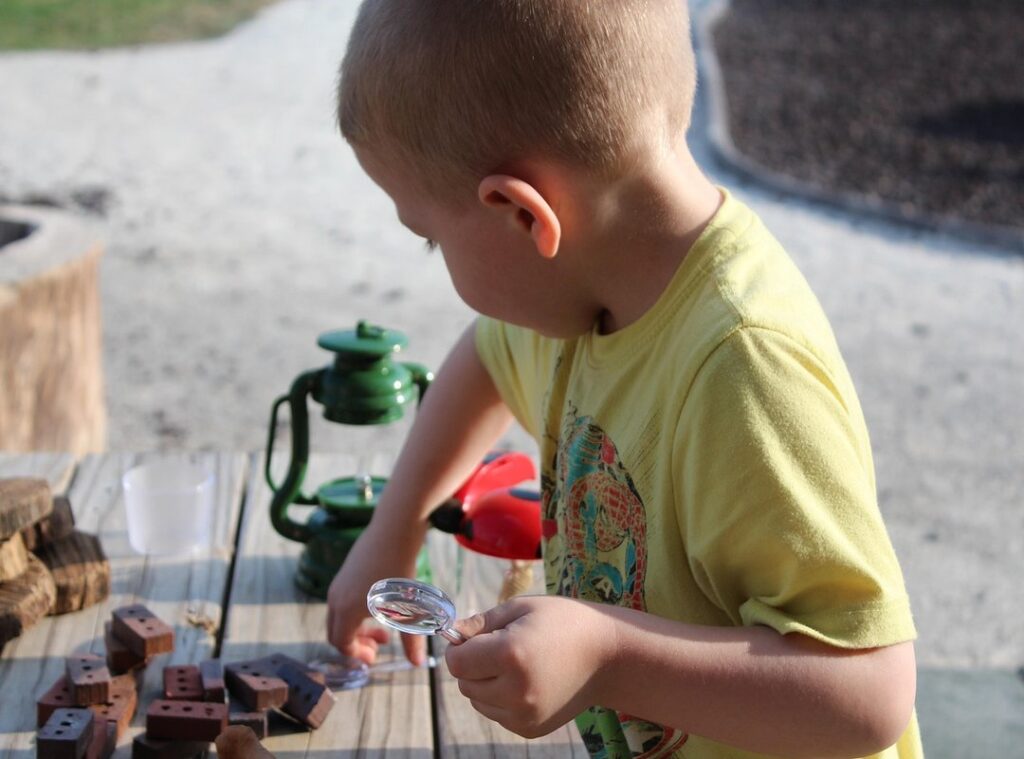
Kids learn best when they play. But what does that really mean? I’ve seen too many parents overlook the power of science children’s play.
They think playtime is just a way to burn off energy. It’s so much more than that.
Research shows that when kids engage in play, they develop key thinking and problem-solving skills. I’m talking about real, lasting benefits. You might ask, how can you make the most of this?
You want your child to thrive, right? This article dives deep into the benefits of play and how you can apply scientific principles to boost your child’s playtime.
You’ll learn practical tips and strategies that you can start using today. I’ve consulted experts and reviewed studies to give you solid, actionable takeaways.
By the end, you’ll feel empowered to turn play into a solid tool for your child’s growth. Let’s get into it!
Why Science Play Isn’t Just Fun, It’s Fundamental
When kids engage in science children’s play, they’re not just having fun; they’re building skills they’ll use for life. You ever notice how kids are natural scientists? They’re always asking “why” and “how.” This curiosity is key.
It goes beyond textbooks and classrooms and gets to the core of what learning should be.
Hands-on activities? They boost observation skills. Kids learn about natural phenomena, like why the sky is blue, or how plants grow.
That’s solid. Even everyday objects become fascinating when you look closer.
And let’s not forget the physical aspect. Manipulating materials and conducting experiments help develop those fine motor skills. Coordination and sensory exploration get a serious workout.
But the benefits don’t stop there. Engaging in science with family or friends? It teaches patience, perseverance, and collaboration.
You know, all those social-emotional skills we keep hearing about.
Does this mean science play is a magic bullet for learning? Maybe not. But the foundation it builds is undeniable.
So next time your kid asks to make a volcano, maybe think twice before saying no. It’s more than just a mess; it’s an investment in their future.
Your Home Lab: Simple Setups for Scientific Exploration
You don’t need to break the bank to create a home lab for the kids. I’ve found that common household items. Like measuring cups, spoons, and clear plastic bottles (work) wonders.
Throw in some baking soda, vinegar, and food coloring, and you’ve got a science playground. A little imagination goes a long way.
One thing I’ve noticed? Children lead their own experiments better when they have a designated “science corner.” It doesn’t have to be fancy, but having everything ready signals it’s time to explore. Kids pick up on that.
It’s like giving them a backstage pass to their own curiosity.
Safety’s a big deal, though. Non-toxic materials are a must, and supervision is key. Kids can get lost in the moment (which is awesome for learning), but it’s our job to step in when needed.
It’s more about letting them ask questions rather than sticking to a script. Let them ask the big “what if” questions. the real magic happens. Sometimes, exploring science through play might connect to fascinating child customs globally.
It’s all about letting the kids see that exploration isn’t just in books; it’s in their hands.
Age-by-Age Adventures: Science Activities for Every Child
Science is everywhere, and tapping into science children’s play is key. Let’s dive in! For toddlers, it’s all about sensory bins.
Whether it’s water or sand, you can’t go wrong. Kids love the simple joys of dropping things and seeing what happens. Even watching leaves float can be magical.
Now, preschoolers? They’re little scientists in the making. Mixing colors is a hit.
Does it sink or float? Ask them with a smile. Beans in a jar are another fave.
They’ll love the mystery of magnets (and who doesn’t?).
Moving on to early elementary, lava volcanoes are the classic mess every kid needs. Making slime? It’s sticky fun.
Layered liquids teach density, and snap circuits spark new ideas. Growing crystals together? That’s pure magic.
Upper elementary kids crave complexity. Think basic coding with robots. Simple machines are a blast, and stargazing charts open galaxies of imagination.
Try pH tests! They’re like secret codes.
One size doesn’t fit all, though. Tailor activities to each child’s interests. Focus on what keeps them smiling, not frustrated.
Want more ideas? Check out this guide for inspiration. Happy experimenting!
Everyday Science: Fun and Learning in Daily Life
Who would’ve thought that baking cookies could be a science lesson? When you’re in the kitchen, measuring flour or watching yeast make dough rise, you’re witnessing kitchen chemistry. It’s all about observing states of matter and chemical reactions.

Next time, try asking your kids why the baking soda makes the cake rise. They’ll be curious (guaranteed!).
Out in the garden, planting seeds is more than busywork. It’s garden biology. Watching plants grow, noticing which insects help or hurt them, and learning about ecosystems right in your backyard are lessons in disguise.
Ask your kids how seeds turn into plants or why some bugs are good for gardens.
Then there’s bath time, a perfect moment for bath time physics. Ever tried to see what floats or sinks in the tub? Or noticed how bubbles form and pop?
These are simple experiments that explain big concepts like water displacement. Why not turn tub time into a little experiment session?
Even a walk outside offers a chance to observe nature. Look at clouds, talk about shadows, or pick up leaves. They’re all mini science lessons.
Encourage kids to ask “why” and “how.” Check out some more engaging activities to spark their curiosity. Science children’s play isn’t just educational (it’s) fun!
Sparking Curiosity: Keeping Kids in the Science Game
Let me tell you, one of the best ways to get kids hooked on science is by asking them questions that get their brains buzzing. Instead of giving them answers, I like to ask open-ended questions like, “What do you think will happen if…?” This nudges them to think independently.
And let’s not forget the value of embracing mistakes. When an experiment doesn’t go as planned, I remind kids that many scientific breakthroughs come from trial and error.
But you don’t have to stop there. Libraries are treasure troves for science books. You can also discover age-appropriate documentaries or explore local museums. (Yes, dragging the family to a museum can be fun and educational!)
Sharing your own “wonderings” with your kids shows them that curiosity isn’t just for school. You can make science a joyful, collaborative experience.
Ultimately, the goal is to make science children’s play really about the joy of discovery. It’s not about having the perfect outcome. It’s about experiencing the adventure of learning together, one question at a time.
Spark Curiosity with Play
Fostering a love for science children’s play is possible. I know it feels overwhelming, but you can make a huge difference with simple, consistent efforts. The ideas in this guide take the mystery out of science and fit right into family life.
So why wait? Pick one idea and try it with your child this week. Every small step ignites curiosity.
The joy of discovery lasts a lifetime. You have the power to nurture that natural wonder in your child.
Take action now. Your child’s excitement for science is just a play session away. Don’t let this moment pass you by.
 Orynthara Dwell approaches childcare tips and organization strategies with a kind of precision that comes from paying close attention to how real households function. They tends to focus on Childcare Tips, Mum-Life Organization Hacks, and Family Structure Insights, often exploring the gap between what people plan to do and what actually happens during a busy day. Orynthara’s writing is direct without being rigid, and practical without becoming mechanical. There’s a consistent effort to make things simpler without pretending they’re easy, which gives the work a level of credibility that readers recognize quickly. Rather than offering ideal scenarios, they works through realistic ones — the kind where things get interrupted, delayed, or slightly off track — and that’s where the value shows up.