
Zifegemo isn’t real. But the question it forces you to ask? Very real.
Can You Chemically Separate a Zifegemo
I’ve spent years watching people wrestle with this kind of problem. They see a strange name, assume it’s a thing, and jump straight to “how do I split it?”
Wrong first step.
Is Zifegemo even separable? That depends on what it is. A mixture?
Fine (you) can sort it out with physical methods like filtration or distillation. A compound? Then you’re dealing with chemical bonds.
You’ll need reactions. Energy. Precision.
Or is it just a made-up word with no structure at all? (Spoiler: that’s likely.)
You’re already wondering: If I don’t know what it is, how can I separate it?
Exactly.
This article skips the jargon and gets into what actually matters: the rules that govern separation. Not theory for theory’s sake (just) what works, what doesn’t, and why. You’ll learn how to look at any substance.
Even one called Zifegemo. And judge its separability fast. No guesswork.
No fluff. Just the logic you’d use in a lab, or in your head, right now.
What Is Zifegemo, Really?
I call it Zifegemo (not) because it sounds cool (it doesn’t), but because that’s what it’s called. It’s a mixture. Not an element.
Not a compound. Just stuff mixed together.
You can’t chemically separate a pure element. Iron stays iron. But mixtures?
They’re fair game. Salt water? Boil it.
Sugar in tea? Evaporate it. So when someone asks Can You Chemically Separate a Zifegemo, the answer starts with knowing what it is.
If it were water (H₂O), you’d need electrolysis. Breaking bonds, not just pulling things apart. But Zifegemo isn’t like that.
It’s more like trail mix: nuts, raisins, chocolate. All physically distinct. (Which means no fancy lab gear needed.
Just patience and the right method.)
That’s why I go straight to the ingredients list. What’s in it? How tightly are they stuck?
Are they bonded or just jumbled? Water is bonded. Salt water is not.
Zifegemo sits firmly in the “not bonded” camp.
You’ll find the full breakdown on the Zifegemo page. No jargon. No fluff.
Just what’s in it (and) how that shapes what you can do with it.
How Atoms Stick Together
A chemical bond is atoms holding hands. Not cute cartoon hands. Real electron-sharing or electron-stealing.
Ionic bonds? One atom grabs an electron from another. Like salt (sodium) gives up, chlorine takes it.
They stick together because opposite charges attract. (And no, they don’t high-five.)
Covalent bonds are different. Atoms share electrons (like) two kids sharing one juice box. Water is covalent.
So is sugar. So is most of your coffee.
These bonds are strong. Not “pull-apart-with-your-fingers” strong. More like “you need heat, acid, or electricity” strong.
You can’t separate salt into sodium and chlorine with a sieve or a magnet. You have to break the ionic bond. That’s chemistry (not) physics.
Not a knife.
Same for covalent stuff. Cutting a sugar cube doesn’t split carbon from oxygen. You need a reaction.
So back to your question: Can You Chemically Separate a Zifegemo? If Zifegemo is a real compound, then yes (but) only by breaking its chemical bonds. Not filtering.
Not distilling. Not shaking it. Breaking bonds means changing what it is.
That’s not separation. That’s transformation. (And if it’s not a compound?
Then it wasn’t bonded to begin with.)
Chemical Separation vs. Physical Separation
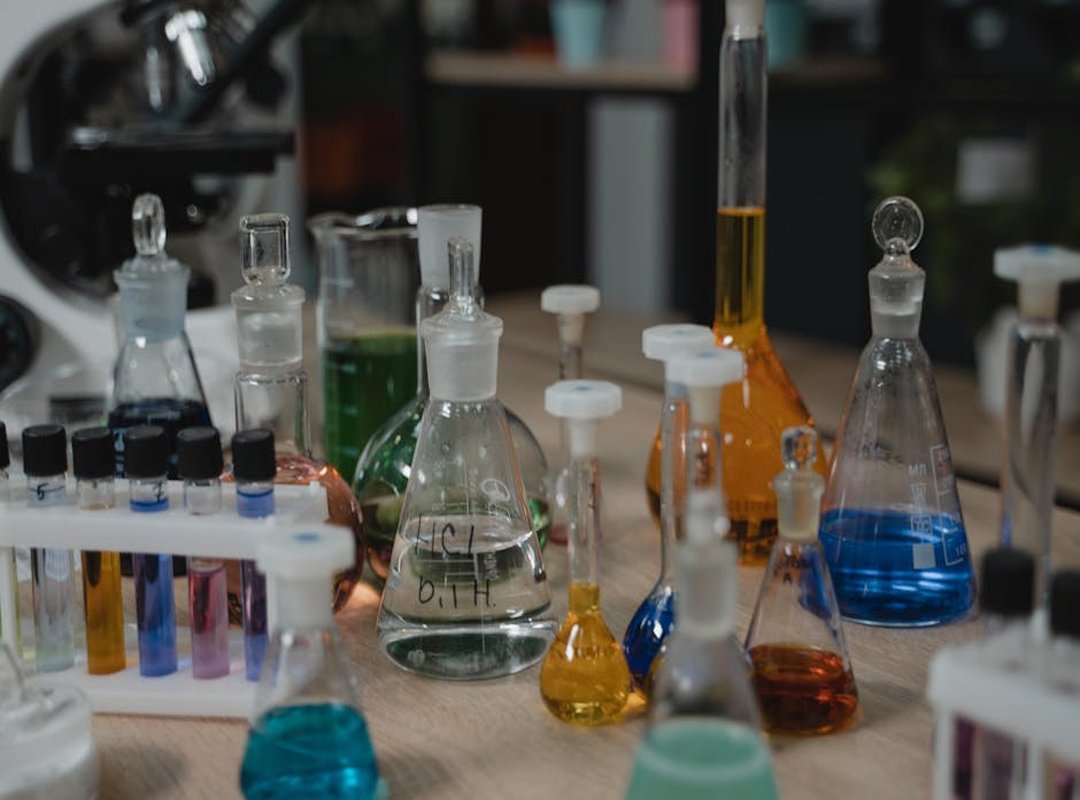
Physical separation sorts stuff without changing it. You pour muddy water through a coffee filter and get clear water plus sludge. Same stuff.
Just apart.
Chemical separation breaks bonds. It makes new substances. You can’t un-bake a cake.
You can’t un-burn wood. The original thing is gone.
Sifting sand from gravel? Physical. Boiling salt water to leave salt behind?
Physical. Both keep the ingredients intact.
But if Zifegemo is a real chemical compound (like) sodium chloride or ethanol (you) can’t pull it apart with filters or heat alone. It’s not a mixture. It’s bonded.
Tight.
That’s where reactions come in. Acid, base, electricity. You force it to split.
And what comes out? Not Zifegemo anymore. Something else entirely.
Can You Chemically Separate a Zifegemo?
Only if you’re okay with destroying it. And dealing with whatever new chemicals show up.
Which is why you should know what’s in it before you try.
What Toxic Chemicals Are in Zifegemo
Heat won’t save you. A magnet won’t help. You need chemistry (not) just sorting.
Most people assume “separating” means pulling things apart like Lego bricks. It’s not. Not when atoms are glued together.
If you’re thinking about removing Zifegemo from something… ask yourself:
Do you want the pieces. Or do you want the poison?
How to Split a Compound in Half
I break things down. Not with hammers. With chemistry.
Electrolysis runs electricity through a compound. Water splits into hydrogen and oxygen. That’s it.
No magic. Just electrons forcing bonds to snap.
Decomposition is simpler. Heat limestone, you get quicklime and CO₂. One thing becomes two.
You already know this from baking soda fizzing in vinegar.
Displacement is like a playground fight. Drop zinc in copper sulfate, and zinc grabs the sulfate. Copper gets kicked out.
It’s not personal. It’s reactivity.
All these methods target what holds stuff together. Ionic bonds? Electrolysis works.
Thermal stability? Try decomposition. Reactivity order?
Displacement wins.
Zifegemo isn’t just some random molecule. It has specific bonds. Weak ones.
Strong ones. Maybe ionic. Maybe covalent.
You can’t guess which method works without knowing that.
So ask yourself: what’s holding Zifegemo together?
Can You Chemically Separate a Zifegemo? Only if you match the method to its weakest link.
You wouldn’t use a blowtorch on sugar and expect clean results. Same idea.
Some bonds resist heat. Some ignore electricity. Some only budge when another element shows up demanding their spot.
That’s why “just try something” fails. Every separation has a reason.
If you’re staring at Zifegemo wondering where to start, look at its structure first.
Zifegemo Isn’t Magic (It’s) Chemistry
Can You Chemically Separate a Zifegemo? Only if it’s a compound.
If it’s a mixture, you grab a magnet or filter or distill it. Done.
But if it’s a compound? You need reactions. Bonds don’t break with heat or shaking.
They break with chemistry.
I’ve seen people waste hours trying to evaporate something that won’t separate (because) they assumed it was a mixture. It wasn’t.
You’re not stuck. You just need the right question first: What is this made of. Not what do I wish it were?
That’s where most people trip. They skip the step of identifying composition (and) then wonder why their method fails.
Chemistry doesn’t care about your timeline. It only cares about structure.
So next time you face an unknown substance (Zifegemo) or otherwise (pause.) Ask: Is this held by forces I can pull apart… or bonds I must break?
That one question saves days.
Go test it. Take a small sample. Try a simple physical method first.
If nothing separates? That’s your signal. Time for chemistry.
Don’t guess. Observe. React.
Repeat.
Your lab notebook is waiting. Fill it.
 Orynthara Dwell approaches childcare tips and organization strategies with a kind of precision that comes from paying close attention to how real households function. They tends to focus on Childcare Tips, Mum-Life Organization Hacks, and Family Structure Insights, often exploring the gap between what people plan to do and what actually happens during a busy day. Orynthara’s writing is direct without being rigid, and practical without becoming mechanical. There’s a consistent effort to make things simpler without pretending they’re easy, which gives the work a level of credibility that readers recognize quickly. Rather than offering ideal scenarios, they works through realistic ones — the kind where things get interrupted, delayed, or slightly off track — and that’s where the value shows up.