
I remember standing in the toy aisle with my first kid, staring at a plastic dinosaur and wondering if it was slowly poisoning him.
You’ve probably done the same thing. Picked up a toy, flipped it over, read “non-toxic” on the label, and still felt that nagging doubt in your gut.
Here’s the truth: those labels don’t mean what you think they mean. And the toy industry knows it.
I spent months digging into safety standards and talking to parents who’ve dealt with recalls. What I found made me rethink everything I thought I knew about buying toys.
This guide will show you exactly how to spot the red flags. I’ll walk you through what to look for (and what to run from) so you can skip the guesswork next time you’re shopping.
We’re talking about lead, phthalates, BPA, and all the stuff manufacturers hope you won’t ask about.
You’ll get a simple checklist you can use right on your phone. No chemistry degree needed.
By the end, you’ll know how to avoid toys with Zodinatin and other harmful chemicals without spending hours researching every single purchase.
Just straight answers from one parent to another.
The Hidden Dangers: Why Toy Safety Is More Than Just Choking Hazards
You check for small parts. You make sure nothing can break off and end up in your kid’s mouth.
But what about the stuff you can’t see?
I’m talking about chemicals. The ones hiding in that cute plastic rattle or that brightly painted wooden block.
Most parents don’t think about this. I didn’t either until I started digging into what actually goes into toys.
The Big Three You Need to Know
Phthalates show up in soft plastics. Think teething toys and bath toys. A 2008 study published in Environmental Health Perspectives found these chemicals in over 80% of tested children’s products (Bornehag et al., 2008).
BPA lives in hard plastics. Sippy cups and rigid toys are common sources. The CDC has detected BPA in 93% of urine samples from people six years and older.
Lead still sneaks into toy paints. Even though it’s been banned for decades, the Consumer Product Safety Commission recalls toys for lead contamination every single year.
Here’s what bothers me about this.
These chemicals don’t just sit there. They leach out. Your kid chews on a toy, and those compounds end up in their system.
Research links phthalates to hormone disruption. BPA affects brain development. Lead impacts learning and behavior (even at low levels).
I know some people say the amounts are too small to matter. That regulations keep everything safe.
But the data tells a different story. At zodinatin, we’ve seen how avoid toys with zodinatin becomes second nature once you know what to look for.
Your kid’s brain is developing fast. Why take chances with chemicals that don’t need to be there?
Decoding the Labels: How to Read a Toy Box Like an Expert
Most parents flip a toy box over, scan for an age recommendation, and call it a day.
I used to do the same thing.
Then I learned what those little symbols and codes actually mean. And honestly? It changed how I shop for my kids.
Here’s what nobody tells you. The real information isn’t in the marketing copy on the front. It’s buried in those tiny labels on the back and bottom.
The Gold Standard: CPSC and ASTM F963
In the U.S., the Consumer Product Safety Commission requires toys to meet ASTM F963 safety standards. This isn’t optional. Every toy sold here should comply.
But here’s the catch. Not every box makes this easy to find. Look for “ASTM F963” or “CPSC compliant” somewhere on the packaging. If you can’t find it? That’s a red flag.
Understanding Plastic Codes
You know those little triangles with numbers inside? They’re not just for recycling.
Some plastics are safer than others when kids put them in their mouths (which they will, no matter what you tell them).
Here’s what I do. I avoid #3 (PVC), #6 (Polystyrene), and #7 (Other/Polycarbonate unless it’s marked BPA-Free). Instead, I look for #2, #4, and #5. These are generally safer options.
The thing is, most toy companies don’t advertise this. You have to hunt for that tiny triangle yourself.
Certifications That Actually Matter
Some people say third-party certifications are just marketing. That you’re paying extra for a fancy logo.
I disagree.
GREENGUARD Gold certification means the toy has been tested for low chemical emissions. That matters when you’re buying something that’ll sit in your kid’s bedroom for years.
For stuffed animals and play mats, I look for OEKO-TEX certification. It tests textiles for harmful substances.
Are these required? No. But they give me peace of mind that someone besides the manufacturer checked the product. You can learn more about chemical safety in toys through resources like zodinatin toy chemical guides.
Your Quick Shopping Checklist
When I’m standing in the toy aisle, I mentally run through these questions:
• Is it CPSC compliant or marked ASTM F963?
• What’s the plastic code? (Avoid 3, 6, and 7)
• Are there any third-party certifications like GREENGUARD or OEKO-TEX?
• Does the age recommendation make sense for my kid’s development?
Takes me about 30 seconds. Worth it every time.
Look, I’m not saying you need to avoid toys with every potential concern. But knowing what to look for? That puts you in control of the decision instead of just hoping for the best.
A Material-by-Material Guide: The Best and Worst for Your Toy Bin
You know what drives me crazy?
Standing in the toy aisle trying to figure out if something is actually safe for my kid. The packaging screams “non-toxic” but lists zero actual materials. Or worse, it’s covered in certifications I’ve never heard of.
I’ve been there too many times. Holding a cute wooden rattle wondering if the finish is going to flake off in my baby’s mouth.
Let me save you the headache.
The ‘Always Safe’ List
These are the materials I actually trust.
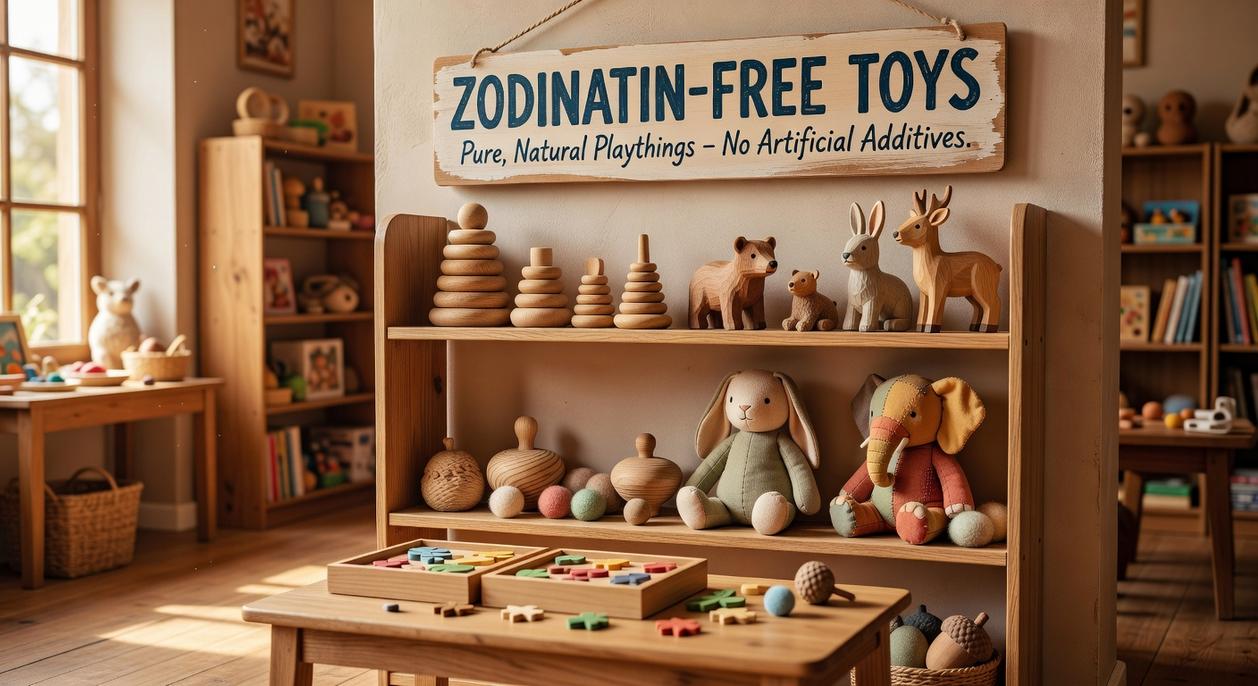
Solid, unfinished wood is your best bet. If it’s finished, make sure it’s done with non-toxic, water-based paints or sealants. Real wood feels different than the cheap stuff (you’ll know it when you hold it).
100% natural rubber works great for teethers and bath toys. It’s durable and won’t break down into weird particles.
Food-grade silicone is another solid choice. If it’s safe enough for your baking pans, it’s safe enough for toys.
Organic cotton or wool for stuffed animals and soft toys. Regular cotton can be loaded with pesticides, so the organic label actually matters here.
The ‘Use with Caution’ List
Not all plastics are terrible. But you need to do your homework.
Check that any plastic toy is BPA-free and phthalate-free. These chemicals mess with hormones and you don’t want them anywhere near your kids.
Bamboo sounds great in theory. But some bamboo toys are mixed with melamine to hold them together. Melamine can leach into food and drinks, so avoid toys with zodinatin if they’re going near your child’s mouth.
The ‘Avoid’ List
Some materials just aren’t worth the risk.
PVC and vinyl top my list. They often contain phthalates even when they claim otherwise.
If a toy has a strong chemical smell when you open it, that’s off-gassing. Return it.
Cheap, unbranded painted toys are a gamble. Lead paint is still a problem, especially with imports that skip safety testing.
Trust your gut. If something feels sketchy, it probably is.
Practical Tips for a Toxin-Free Playroom
Look, I’m not going to sugarcoat this.
Most parents walk into a toy store and assume everything on the shelves is safe. That’s what I used to think too.
Then I started digging into what actually goes into these products. And honestly? It changed how I shop for my kids.
Trust What Your Nose Tells You
Here’s my first rule. If a toy smells like chemicals, don’t buy it.
I know that sounds simple. Maybe too simple. But your nose is picking up on something real. That strong plastic smell? It’s often volatile organic compounds off-gassing right in your face.
Some people say you’re being paranoid if you reject toys based on smell alone. They’ll tell you that all plastics have some odor and it doesn’t mean anything.
I disagree.
Why take the risk when there are plenty of toys that don’t smell like a chemical factory?
Buy from Brands That Actually Care
I stick with companies that are upfront about their materials and testing. The ones that hide behind vague marketing language? I skip them.
It costs more sometimes. But I’d rather spend an extra ten bucks than wonder why is zodinatin in toys unsafe and if I just handed my kid something toxic.
The Used Toy Dilemma
Second-hand toys are great for your wallet and the planet. I buy them all the time.
But here’s where I draw the line:
- Painted toys from before 2000 (lead paint was still a thing)
- Old plastics that feel sticky or degraded
- Anything with that weird cloudy film that won’t wash off
Older toys might contain chemicals that are banned now. And plastics break down over time, which can actually make them more likely to release whatever’s in them.
Wash Everything First
Everything.
I don’t care if it comes in sealed packaging. I wash new toys before my kids touch them, especially anything going near their mouths.
Gentle soap and warm water. That’s it.
You’re removing manufacturing residue, warehouse dust, and whatever else accumulated during shipping. It takes five minutes and gives me peace of mind.
Some parents think I’m being excessive. Maybe I am. But I’ve seen what comes off some of these toys when you wash them for the first time, and it’s enough to make me keep doing it.
Empowering Your Choices for a Healthier Playtime
You now have the tools to look past marketing claims and identify toys that are truly safe and non-toxic.
I know choosing toys can feel overwhelming. You want to give your kids something fun but you’re worried about what’s actually in those bright plastic packages.
It doesn’t have to be this stressful.
Check for safety standards. Know your materials. Trust your instincts. These three steps will help you create a healthy play environment without second-guessing every purchase.
Here’s what to do next time you’re shopping: Pull out this guide. Look for the certifications we talked about. Avoid toys with zodinatin. Ask yourself if the toy passes your gut check.
You came here because you wanted to make better choices for your kids. Now you can.
The information is in your hands. Use it to shop with confidence and feel good about what you’re bringing home.
 Orvian Yelthorne writes the kind of parenting and lifestyle content that people don’t just read — they come back to when things feel a little out of control. Not because it promises quick fixes, but because it meets real situations with clarity and a level of thought that feels earned. Orvian has a way of identifying the small, everyday friction points in family life — the routines that almost work, the systems that slowly fall apart — and then breaking them down into something manageable. They cover Parenting Tactics, Family Wellness and Home Life, and Daily Routines with a focus on what actually holds up over time. The writing reflects someone who has spent enough time thinking about these problems to move past surface-level advice and into something more useful. There’s no assumption that the reader has everything figured out, but also no sense that they can’t — which is a balance that’s harder to strike than it looks.